Collaborations

Delight
Clinical Study in Collaboration with the Institute of Nutrition, Mahidol University
All participants received a single influenza vaccination at the Golden Jubilee Medical Center, Mahidol University, to stimulate immune responses against H1N1, H3N2, and influenza B viruses. In addition to vaccination, participants consumed their assigned milk beverage for 2 weeks before vaccination and continued for 4 weeks after vaccination. During the study, all participants were instructed to avoid consuming other probiotic-containing foods. Blood samples were collected before consuming the fermented milk, after 2 weeks of consumption (prior to vaccination), 4 weeks after vaccination, and 2 weeks after discontinuing the fermented milk to evaluate changes in immune responses against influenza viruses.
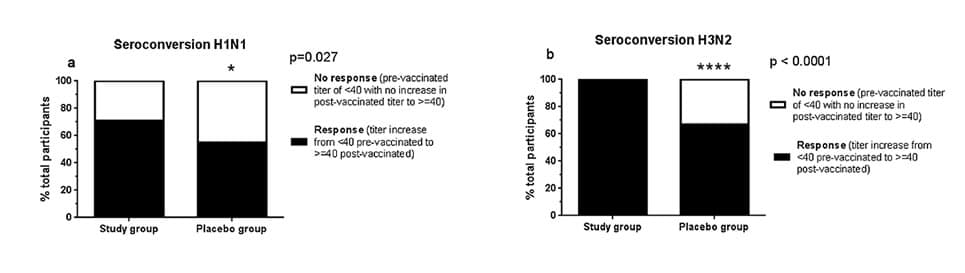
among participants with low baseline immunity (HI antibody titer <40), those who received the influenza vaccine together with fermented milk containing probiotics showed a higher seroconversion rate against H1N1 and H3N2 influenza viruses than those who received the probiotic-free milk beverage.
Table: Seroconversion rates against H1N1 and H3N2 influenza viruses.
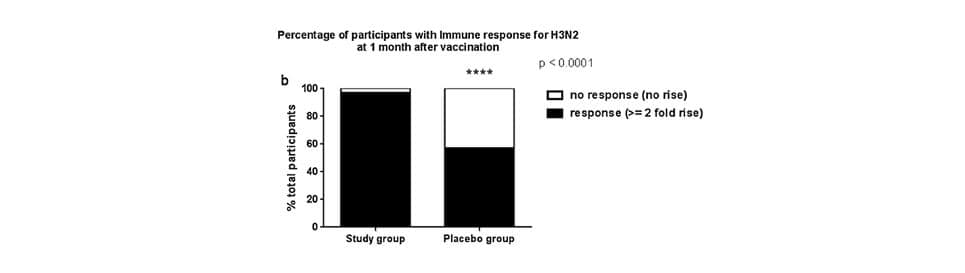
The study also found that among participants with pre-existing immunity, those who consumed fermented milk containing probiotics showed at least a two-fold higher vaccine response against the H3N2 influenza virus.
Table: Vaccine response rates against the H3N2 influenza virus.